


Cholesterol and Early-Onset Stroke: The Critical Role of Dietary Control
- 2月27日
- 讀畢需時 2 分鐘
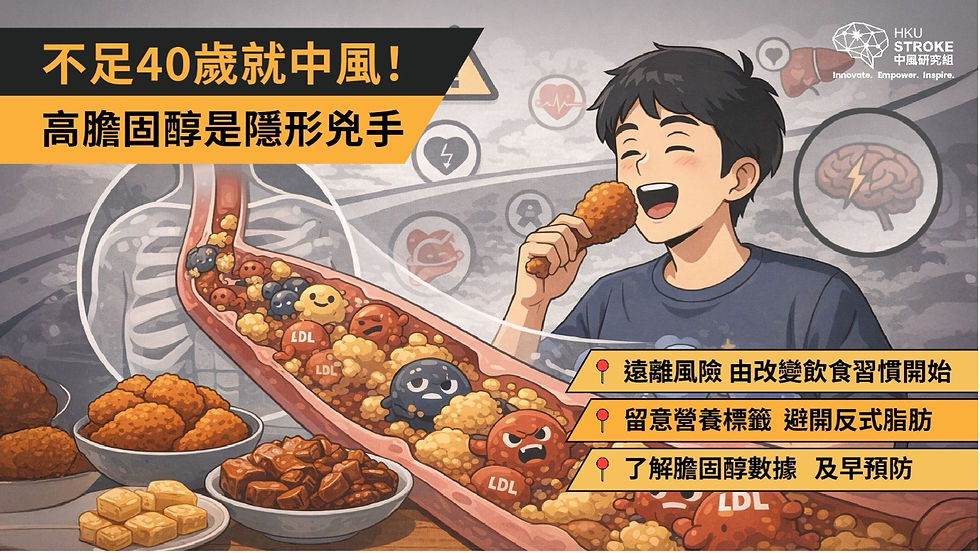
Stroke is increasingly affecting younger adults. Clinical data indicate that among patients aged 18–55 who experience stroke, approximately 60% have elevated cholesterol and 40% are overweight or obese. Stroke is no longer confined to older individuals; vascular injury at any age can have devastating consequences.
Cholesterol is essential for normal physiological function; the problem arises when levels are imbalanced. High-density lipoprotein cholesterol (HDL-C) helps protect blood vessels, whereas elevated low-density lipoprotein cholesterol (LDL-C) drives atherosclerosis. LDL-C deposits in arterial walls, forming plaques that narrow the lumen and reduce blood flow. When plaques rupture, thrombus formation can occur, with emboli traveling to cerebral arteries and causing ischemic stroke.
Dietary patterns are a major contributor to elevated LDL-C. Foods high in saturated and trans fats—such as fatty meats, processed meats, fried foods, and commercially baked goods—raise LDL-C levels. Trans fats are particularly harmful because they both increase LDL-C and lower protective HDL-C.
Vascular protection begins with dietary modification:
Replace saturated fats with healthier fats such as olive oil, nuts, avocados, and oily fish.
Increase dietary fiber intake (e.g., oats, brown rice, whole grains) to help regulate cholesterol.
Choose lean protein sources and low-fat or plant-based dairy alternatives.
Minimize deep-fried and processed foods.
Read nutrition labels carefully, especially to avoid “trans fat” and “hydrogenated oils.”
When lifestyle modification is insufficient, especially in individuals with genetic predisposition—pharmacotherapy plays a key role. Statins effectively lower LDL-C, stabilize plaques, and reduce vascular inflammation, substantially decreasing the risk of stroke and cardiovascular disease. For high-risk patients who do not reach targets with statins alone, PCSK9 inhibitors can further reduce LDL-C by an additional 40–50%.
Hypercholesterolemia is often asymptomatic, making it a “silent” risk factor. Regular lipid screening is critical. Recommended LDL-C targets are:
<3.0 mmol/L for the general population
<2.6 mmol/L for high-risk individuals (e.g., smokers, hypertension, diabetes)
<1.8 mmol/L (or even <1.4 mmol/L) for those at very high cardiovascular risk
Early detection, dietary control, appropriate exercise, and evidence-based medication together provide the most effective strategy to reduce stroke risk and preserve long-term cardiovascular health.


留言